The history of the Prunty horses is a
long and diverse one, spanning a century and four generations
of the Prunty family. The Prunty ranch, located ninety miles north of
Elko, Nevada, is nestled against the foothills of the rugged Jarbidge
Wilderness Area. The ranch stands as a timeless monument to a bygone
era, years of hard labor, and determination to leave a legacy to future
generations.

The Prunty ranch has been in the family since the early 1900s,
when Earl Q. Prunty settled at the base of Copper Mountain, along the
banks of the Bruneau River, near the old mining town of Charleston. Earl
came to the area with his father, Pinkard, who was seeking his fortune
in gold. While Pinkard gathered and sold mustangs to raise money for his
mining venture, Earl came to love horses and the ranching way of life.
Earl developed a productive ranch from the rocky sagebrush landscape,
and raised a family. He produced a few local rodeos in the 1930’s and,
during the depression, sold horses to south-eastern states for work
horses. He also marketed horses to the cavalry remount program.
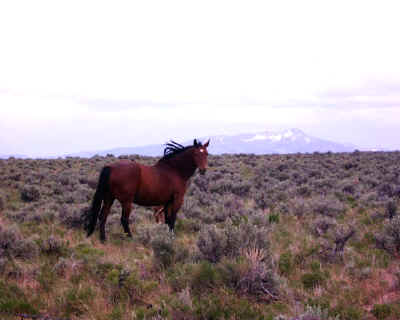
Just
as they are now, the horses were born and raised on the Diamond A
Desert in southern Idaho, roughly 35 miles north of the ranch. The
horses were, and are even today, products of quality bloodlines and
their extremely unique environment. The horses possess a unique blend of
hardiness and natural ability that makes them ideal for almost any
purpose
Throughout the years, this has been the type of horse that the
Pruntys have continued to raise. Between 1948 and 1968, Earl’s sons,
Frank “Shorty” and Harold “Corky”, selected the roughest of the bunch
and hit the rodeo trail with a string of bucking horses that is
remembered even today. The bucking horses Cornflakes and Broken Blossom
are probably the most famous, but some of the other great ones were:
Royal Taboo, Hereford, Country Cousin, Lookout, Goldrush, Roller,
Pathfinder, and Bandoleer. From the local amateur rodeos of northern
Nevada to the National Finals Rodeo, the Diamond A Rodeo Company made
its mark in the rodeo history books.
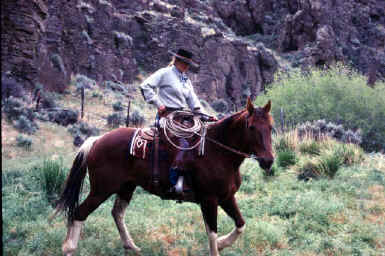
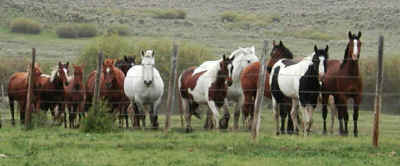
Since that time, the Pruntys have focused their efforts on
breeding and raising great riding horses; horses that could easily carry
a rider fifty miles a day through rough country, and still get in the
ground and work a cow. By breeding the hearty desert mares to registered
quarter horse and paint stallions over the last 35 years, the horses
have been refined to include the best traits of both worlds.
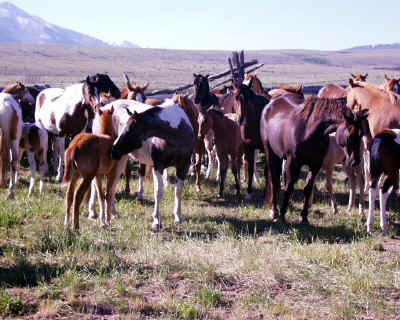
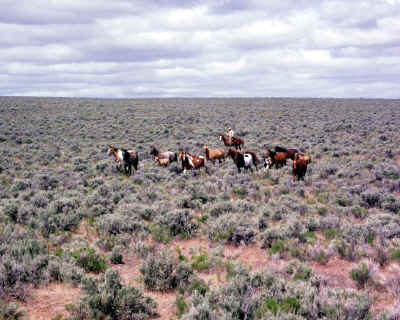
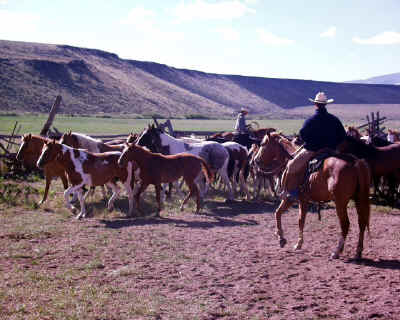
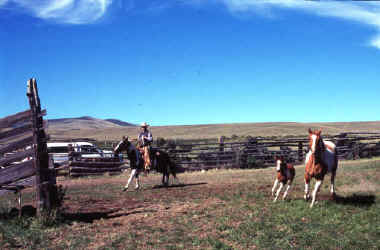
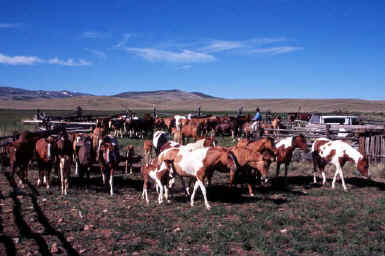
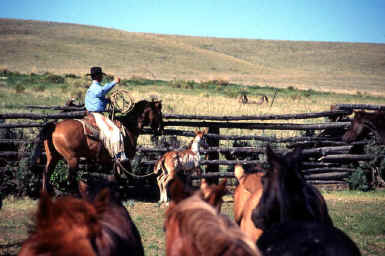
Undoubtedly the most unique thing about our horses is the way
they are raised, on the open range, the way horses have evolved
naturally across the ages. However, our horses are not mustangs.
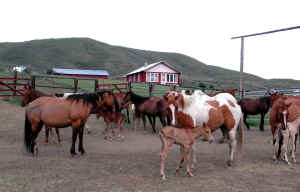
Our
horses spend five months out of the year at the home ranch in
Charleston, from late May to early November, and the remainder of the
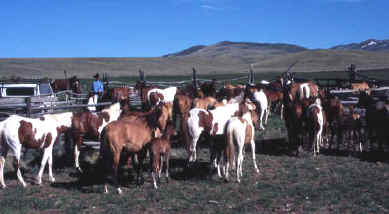
year on the Diamond A Desert. The mares stay with the
stallions year-round, cycling and breeding
naturally, with no human interference. All of the foals are born out in
the open, without assistance, with the majority being born in April and
May.
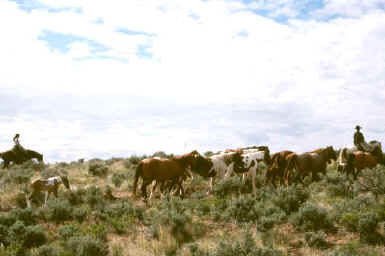
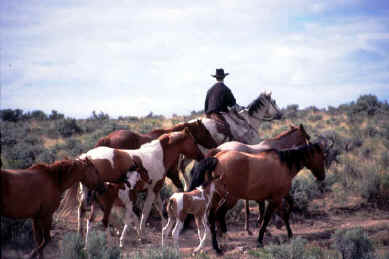
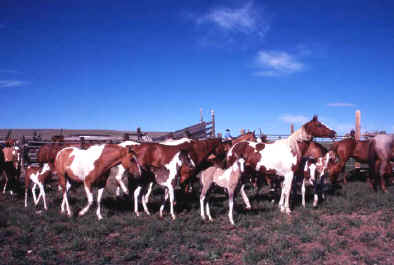
From birth, the foals travel at their mothers’ sides, roaming
the vast sagebrush plateau with the foraging herd. It is from this that
they begin to learn how to carry themselves in extremely rough, rocky
country, and by moving constantly with the stud bunch, they develop
physically, mentally, and naturally.
In November, if the foals are aged enough, they are weaned from their
mothers before the horses return to the desert. The foals are kept at
the ranch and halter broken over the winter.
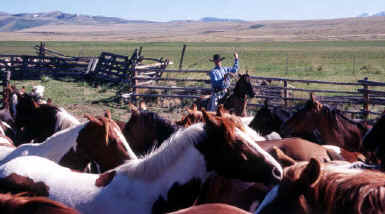
It is a forty mile trot from the ranch to the gateway to the
Diamond A, and over the years, horses that couldn’t easily travel that
distance in a day have been culled, in a process much like natural
selection. Breeding these mares to registered stallions has served to
infuse new blood into the program, developing “hybrid vigor,” and to
refine conformations while still retaining the qualities of the original
desert horses. 
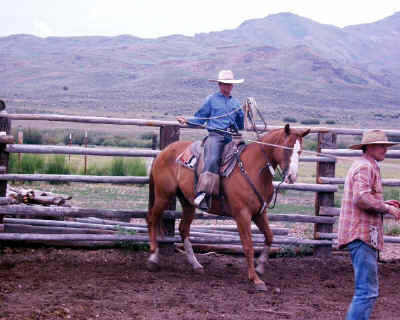
While continually maintaining the heart and stamina of their
ancestors, the horses have excelled in many areas. On the right is a
picture of Shorty Prunty with his horse Canary, in 1946. Canary came
from the Diamond A Desert, and won the snaffle bit competition at the
Elko County Fair, excelling in working cow horse events.
Another excellent example of the all-around capabilities of our
horses is this buckskin gelding named Snip. Snip excelled in barrel
racing, pole bending, and team roping. Now happily retired, in past
years he was also a mainstay for the annual Diamond A horse gathering in
the spring, putting long miles in day after day, and still having enough
“go” to make the thirty mile trot home.
Area
ranches have purchased a number of Prunty Horses. In recent years,
our broke paint geldings have brought upwards of $4000 at local sales.
Others have been shown successfully in the highly competitive Elko
County Fair, carried children in parades and various competitions, been
used extensively in the branding pen, become surefooted trail horses,
and last but not least, become steadfast companions.
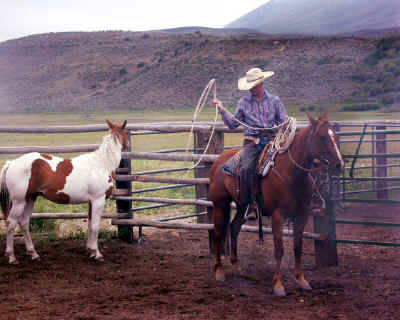
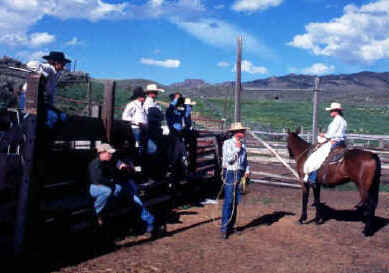
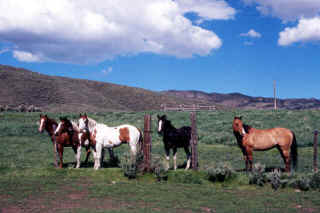
Consider the potential of these horses as mounts for yourself,
for your ranch hands, or for your guest ranch business. Take a tour
through our Photo Gallery and Where Are They Now
page, and see what these horses can do for you. |